 Search
 Menu
Menu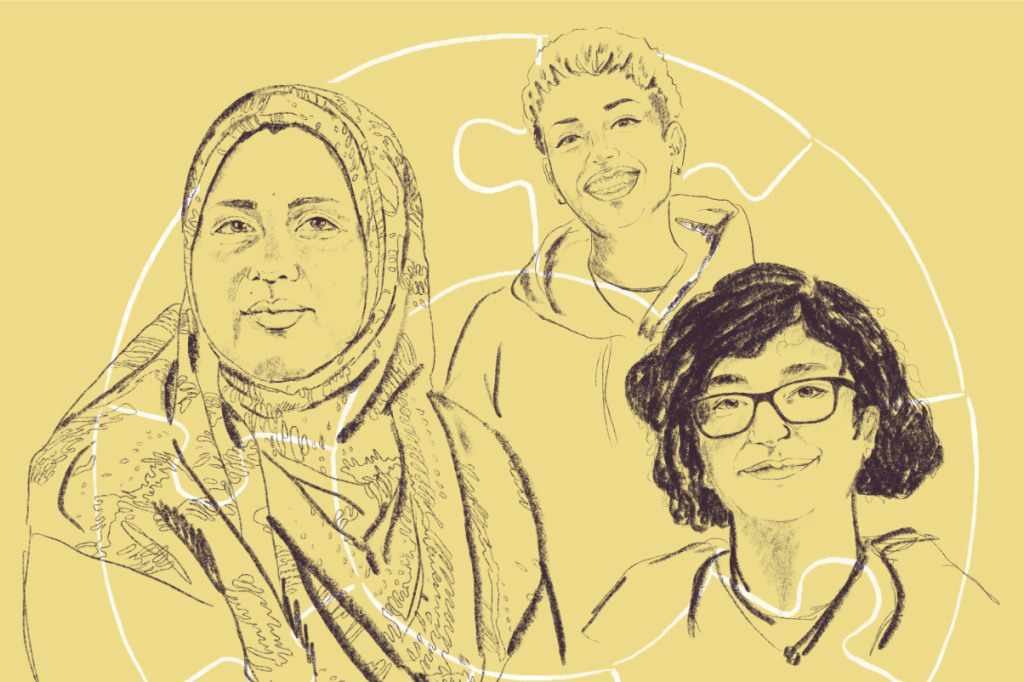
The model has been co-designed by women with lived experience of care and custody alongside practitioners and leaders across prisons, probation, local authorities and community organisations. It aims to create more joined-up support, helping women navigate custody and release with the relationships, stability and practical support they need to thrive.
Our impact
Care-experienced people are significantly overrepresented in the women's prison estate. Around 31% of women in prison have experience of the care system, compared with around 2% of the general population (Women in Prison, 2023).
The experiences of care-experienced women are often shaped by multiple and overlapping inequalities, including poverty, racism, neurodivergence, gender-based violence and insecure immigration status. Many women leave prison without the family networks and support systems that others can rely on, increasing the risk of isolation, poor outcomes and reoffending.
Women with care experience often tell us that support can feel fragmented, confusing and difficult to navigate. Different services may be working with the same person, but not always working together.
Connections was designed to address this challenge.
Building on learning from the Always Hope model, which supports care-experienced young men in prison, Connections creates a more coordinated approach that brings together prison, probation, local authority and community-based support around each woman.
The Connections model
The model is built around four key elements:
A joined up team
Women are supported by a multi-agency team that works together around a single plan.
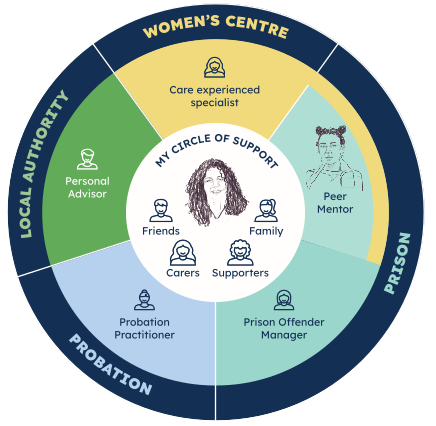
The team brings together staff from prison, probation and local authorities, alongside care-experienced peer mentors and a dedicated Care Experience Specialist. Together they create and deliver one shared plan, centred on the woman's goals, strengths and aspirations.
At the heart of this approach is My Plan, a co-designed planning tool that aligns with existing statutory processes while providing a more person-centred way of working.
The model introduces a new Care Experience Specialist role. Based within the prison but employed by a women's centre, they support all care-experienced women, regardless of age, sentence length or remand status, while maintaining strong links into community support.
Women are supported by a multi-agency team that works together around a single plan.
The team brings together staff from prison, probation and local authorities, alongside care-experienced peer mentors and a dedicated Care Experience Specialist. Together they create and deliver one shared plan, centred on the woman's goals, strengths and aspirations.
At the heart of this approach is My Plan, a co-designed planning tool that aligns with existing statutory processes while providing a more person-centred way of working.
The model introduces a new Care Experience Specialist role. Based within the prison but employed by a women's centre, they support all care-experienced women, regardless of age, sentence length or remand status, while maintaining strong links into community support.
A circle of support
Women are supported to build and sustain positive relationships both during custody and after release.
Care-experienced peer mentors provide practical support, encouragement and understanding from shared experience. Women are also supported to strengthen family relationships where appropriate and build wider networks of safe, supportive connections.
Women are supported to build and sustain positive relationships both during custody and after release.
Care-experienced peer mentors provide practical support, encouragement and understanding from shared experience. Women are also supported to strengthen family relationships where appropriate and build wider networks of safe, supportive connections.
A safe place to live
Housing is a critical foundation for rehabilitation and wellbeing.
Connections includes a dedicated housing pathway designed to help women secure safe and stable accommodation when leaving prison, reducing uncertainty and supporting a more successful transition back into the community.
Housing is a critical foundation for rehabilitation and wellbeing.
Connections includes a dedicated housing pathway designed to help women secure safe and stable accommodation when leaving prison, reducing uncertainty and supporting a more successful transition back into the community.
A system that supports me
The model aims to create lasting change beyond individual support.
Organisations work together using a corporate parenting approach, sharing responsibility for helping care-experienced women achieve positive outcomes. The focus is on creating a system that feels connected, consistent and committed to rehabilitation both in custody and in the community.
The model aims to create lasting change beyond individual support.
Organisations work together using a corporate parenting approach, sharing responsibility for helping care-experienced women achieve positive outcomes. The focus is on creating a system that feels connected, consistent and committed to rehabilitation both in custody and in the community.
Our approach
Connections was co-designed by three groups working together throughout the process.
- The Lived Experience Design Team - a group of care-experienced women at HMP Foston Hall used their experiences, insights and ideas to lead the design of the model and shape the changes they wanted to see.
- The Design Team - a group of practitioners from prison, probation, children's social care, women's centres, mental health services and the voluntary sector worked together to design and test new approaches.
- The Steering Group - leaders from HMPPS, local authorities, charities, national organisations and lived experience panels provided strategic oversight and helped create the conditions for long-term change.
The design process was guided by six core principles:
- We are led by women with lived experience and value their insight, strength and leadership.
- We take a trauma-informed, anti-racist and gender-responsive approach in everything we do.
- We recognise power, reflect on it and work to share it fairly.
- We design to challenge inequality and reduce harm, not reproduce it.
- We build on existing strengths in people, relationships and communities.
- We learn through testing, reflection and continuous improvement.
A message from our lived experience co-design team:
Why this matters
We are women and people who’ve been in care and in prison.
We’ve been let down by systems that don’t always work together — or work for us.
We’ve been through trauma, loss and big changes.
These things didn’t just hurt — they happened in systems that failed to protect us and sometimes caused more harm.
Some of us don’t have family we can rely on.
Some of us can’t see our children.
Some of us don’t know where we’ll live after prison.
Some of us don’t know who to turn to for help.
But we are not just what’s happened to us.
We are strong. We are creative. We look after each other.
We know our own lives better than anyone else.
That’s why we’re not just asking for better support —
We’re working together to build it.
- From the Lived Experience Design Team
What’s next?
Connections was co-designed between September 2025 and May 2026.
The model will now be prototyped at HMP Foston Hall from June 2026 to May 2027. We are delighted to have secured funding for a dedicated Care Experience Specialist, hosted by Anawim Women’s Centre in Birmingham, to support delivery of the prototype.
Through the prototype phase, we will test the model in practice, learn what works, and explore how the approach could be sustained and spread more widely.
Resources
The Connections Handbook
Learn more about the context of this work, our co-design process, and the Connections model.

The Connections Blueprint
Learn more about the details of the model, and what exactly we will test during prototyping.
‘My Plan’ Planning Tool
Learn more about the tool the joined-up team will use to plan with people with experience of care and women’s prison.
Joined up planning and support
Learn about how the joined up team will work together to support people.
If you would like to see a plain text version of any of these documents please email sophie.todd@innovationunit.org
A poem from our co-design team
This poem was written by a member of the Lived Experience Design Team and reflects the vision that sits at the heart of Connections.
Care experienced
Locked up inside
Going out of our minds
Got no support
We all need help
Can’t do this on our own
We asked for help
For too long
Now we take a stand
Rising up, building on each other
People take time to talk
But talk they do
About their feelings, their hopes
Holding one another
Through good and bad
Talk, listen
To our views, our past
See who we really are
We are not our past
Our future awaits
Beyond the locked gates
Share this page
 Share this on Bluesky
 Share this on LinkedIn