 Search
 Menu
Menu

The Neighbourhood Health Framework promises to improve population health, address inequalities and reduce waste through a shift towards prevention, community-led care and closer working across boundaries. Key partners in this mission are the voluntary, community and social enterprise sector (VCSE).
Since 2021, Innovation Unit has worked alongside 12 VCSE-led partnerships, as the learning and support partner for The National Lottery Community Fund’s Health Equalities programme. Together, we explored what it takes to build cross-sector, place-based partnerships that have the power to really shift health inequalities.
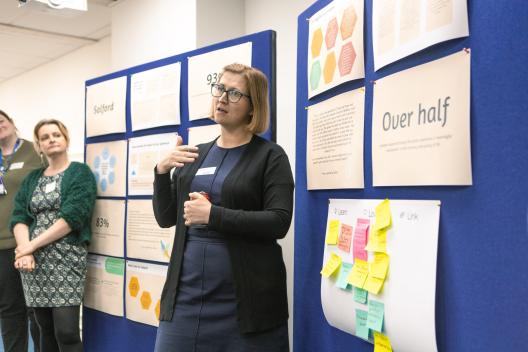
As the programme came to an end this spring, we hosted a series of cross-sector roundtable conversations to explore how learning from this programme can help others make the journey towards a truly integrated approach to neighbourhood health.
The VCSE: anchoring the "left shift"
While national strategy has recently re-emphasised the importance of the “left shift” towards prevention and community-led care, the benefits have long been understood by those already working in this way. They understand that VCSE partners are often best placed to identify whose knowledge, insight, and networks are crucial to tackling health inequalities - and making sure that what matters most to local people is at the heart of creating health equity.
Within the Health Equalities programme we saw brilliant examples of VCSE-led partnerships tackling health inequalities through community co-design and co-production, lived experience leadership and redistributing resources to those closest to a health challenge.
The most successful partnerships on the programme were underpinned by a culture of mutual respect; where partners are treated as equals irrespective of their sector or scale and where VCSE organisations are valued not just as service providers, but as:
- Vital local anchors, with deep relationships and understanding of local communities
- Experts in co-production, community development and approaches to care and support which are relational, culturally-led and trauma informed
- Agile and creative partners with a critical role to play in unlocking innovation.
An uphill struggle
Despite many inspiring examples, the work of developing true integration remains slow and difficult. Key tensions that surfaced repeatedly throughout the Health Equalities Programme, and our roundtable conversations, included:
Persistent underinvestment
Funding for VCSE engagement in health continues to be patchy and short term, creating an environment where organisations are constantly fighting for opportunities to prove their worth, and are left exhausted and underfunded. Often, the cost of simply ‘being in the room’ is overlooked; statutory partners can assume that VCSE time and expertise is ‘free’, but community organisations require dedicated resources and capacity to attend strategic meetings regularly. For VCSE leaders to be equal partners, collaboration can’t be an optional add-on, but must be woven into the strategic focus—and funding — for whole system leadership.
Funding for VCSE engagement in health continues to be patchy and short term, creating an environment where organisations are constantly fighting for opportunities to prove their worth, and are left exhausted and underfunded. Often, the cost of simply ‘being in the room’ is overlooked; statutory partners can assume that VCSE time and expertise is ‘free’, but community organisations require dedicated resources and capacity to attend strategic meetings regularly. For VCSE leaders to be equal partners, collaboration can’t be an optional add-on, but must be woven into the strategic focus—and funding — for whole system leadership.
Stubborn power imbalances
VCSE and statutory partners work very differently, with different funding structures and operating models. There is often a lack of understanding about how each partner operates, the strengths they bring and the pressures they face. Without intentional relationship building time and support, this misalignment and misunderstanding inevitably creates barriers to collaboration, mismatched expectations, and missed opportunities to maximise collective impact.
VCSE and statutory partners work very differently, with different funding structures and operating models. There is often a lack of understanding about how each partner operates, the strengths they bring and the pressures they face. Without intentional relationship building time and support, this misalignment and misunderstanding inevitably creates barriers to collaboration, mismatched expectations, and missed opportunities to maximise collective impact.
Competing incentives
Political winds, performance measurement and funding cycles constantly pull statutory partners’ focus towards acute pressures, making it difficult to mobilise the leadership capacity and resources needed to drive long-term prevention and collaboration. This can leave VCSE partners on a ‘hamster wheel’ of promising conversations and pilot activities that absorb lots of time and resources, but never lead to sustainable shifts in practice, partnerships or funding.
Political winds, performance measurement and funding cycles constantly pull statutory partners’ focus towards acute pressures, making it difficult to mobilise the leadership capacity and resources needed to drive long-term prevention and collaboration. This can leave VCSE partners on a ‘hamster wheel’ of promising conversations and pilot activities that absorb lots of time and resources, but never lead to sustainable shifts in practice, partnerships or funding.
System complexity
The health and care system is becoming increasingly complex. This means that where collaborative relationships are not championed, supported and embedded at every level of the system - from national priority setting through strategic commissioning, place leadership, and into the operational reality of individual neighbourhoods - the best strategic intentions fail to take root, and/or the best local practice fails to scale. This complexity is also particularly challenging for VCSE organisations representing communities of identity, rather than of geography, who find themselves having to build relationships across multiple neighbourhoods, where once they would have collaborated at place or system levels.
The health and care system is becoming increasingly complex. This means that where collaborative relationships are not championed, supported and embedded at every level of the system - from national priority setting through strategic commissioning, place leadership, and into the operational reality of individual neighbourhoods - the best strategic intentions fail to take root, and/or the best local practice fails to scale. This complexity is also particularly challenging for VCSE organisations representing communities of identity, rather than of geography, who find themselves having to build relationships across multiple neighbourhoods, where once they would have collaborated at place or system levels.
Constant change
Each of these tensions is exacerbated by the context of ongoing structural and workforce change across both the NHS and Local Government. The VCSE sector itself faces constant financial risk, with 72% of organisations reporting ‘very frequent’ income and funding pressures, and yet, VCSE leadership is often much more stable than other sectors. This means they hold hugely valuable historical knowledge and system insights, but have to invest significant amounts of time identifying and building relationships with the right people, only for their roles and responsibilities to change and the process to start again.
Each of these tensions is exacerbated by the context of ongoing structural and workforce change across both the NHS and Local Government. The VCSE sector itself faces constant financial risk, with 72% of organisations reporting ‘very frequent’ income and funding pressures, and yet, VCSE leadership is often much more stable than other sectors. This means they hold hugely valuable historical knowledge and system insights, but have to invest significant amounts of time identifying and building relationships with the right people, only for their roles and responsibilities to change and the process to start again.
Creating the conditions for meaningful partnership
Through learning alongside the VCSE partnerships on the Health Equalities Programme, we’ve identified several actions that help to create the conditions for successful partnership at every level of the system:
Amplifying the influence and impact of the VCSE sector
Leadership development and relationship building
- Many of the grant holders invested in growing trusted relationships and collaborative place leadership through delivery of cross sector leadership development programmes. Grant holders such as Beacon Centre brought statutory and VCSE leaders together to grow their capabilities, creating shared practice across the health ecosystem.
- Some also established cross-sector buddying schemes which created opportunities for deeper connection and understanding of the pressures faced by different sectors
Cross sector capability building
- Several grant holders also ran bespoke training and capability building sessions for statutory partners on topics such as community development and ‘co-production; Voluntary Impact Northamptonshire’s Community of Practice attracted more than 50 people from across the county.
- Other infrastructure organisations offered structured support to their VCSE members, building their understanding of and ability to engage with the statutory system.
Micro funding
- A large number of grant holders, including Social Enterprise Kent and Catalyst Stockton facilitated schemes to distribute funding to local VCSE groups, including small newly constituted groups with no prior experience of applying for funding. This helped to build confidence, capability and creativity, and led to new ideas and partnerships involving diverse community groups.
Pathways to influence
- Through these new collaborations, the grant holders were able to bring many more VCSE organisations into the wider health ecosystem for the first time, helping to build awareness of the diversity and breadth of the VCSE sector, and creating new opportunities for collaboration.
Leadership development and relationship building
- Many of the grant holders invested in growing trusted relationships and collaborative place leadership through delivery of cross sector leadership development programmes. Grant holders such as Beacon Centre brought statutory and VCSE leaders together to grow their capabilities, creating shared practice across the health ecosystem.
- Some also established cross-sector buddying schemes which created opportunities for deeper connection and understanding of the pressures faced by different sectors
Cross sector capability building
- Several grant holders also ran bespoke training and capability building sessions for statutory partners on topics such as community development and ‘co-production; Voluntary Impact Northamptonshire’s Community of Practice attracted more than 50 people from across the county.
- Other infrastructure organisations offered structured support to their VCSE members, building their understanding of and ability to engage with the statutory system.
Micro funding
- A large number of grant holders, including Social Enterprise Kent and Catalyst Stockton facilitated schemes to distribute funding to local VCSE groups, including small newly constituted groups with no prior experience of applying for funding. This helped to build confidence, capability and creativity, and led to new ideas and partnerships involving diverse community groups.
Pathways to influence
- Through these new collaborations, the grant holders were able to bring many more VCSE organisations into the wider health ecosystem for the first time, helping to build awareness of the diversity and breadth of the VCSE sector, and creating new opportunities for collaboration.
Hard-wiring collaboration
Pooled funding
- Pooled funds are of course one of the most impactful ways to support cross-sector partnership, but it takes bold vision and leadership to prioritise partnership investments when funding is so constrained across the system. The Hyndburn Way project built a strong relationship with their local government partner, who recognised the value of cross-sector collaboration. Together, they delivered projects related to affordable food provision, young people’s mental health, and workforce development.
Super-connectors
- Many of the grant holders used their funding to support the roles of ‘super-connectors’ - key individuals with time, experience, existing relationships, credibility, and support - to build trust, grow networks and represent the wider VCSE sector in strategic spaces.
Partnership forums
- Collaborative leadership doesn’t happen by accident - responsibility and commitment is needed to make sure that everyone can collaborate as equals. Partnership forums - at neighbourhood, place and system levels - can play a powerful role in building sustainable cultures and ways of working, as long as they have clear membership, remits and connections between levels and spaces, time to focus on relationship building, and adequate funding for VCSE participation.
- Several of the grant holders also helped to establish new VCSE forums and connections between existing groups, to ensure that the wider sector could be effectively represented at a strategic level, and appropriately involved in decision-making.
Collaborative events and communications
- Many of the grant holders hosted regular events for cross sector partners and communities to help them get to know each other, build relationships, and to celebrate shared achievements.
- Some - like G:HIVE in Greenwich - also created digital infrastructure, websites and newsletters to share regular, timely insights and messages to cross-sector partners.
Pooled funding
- Pooled funds are of course one of the most impactful ways to support cross-sector partnership, but it takes bold vision and leadership to prioritise partnership investments when funding is so constrained across the system. The Hyndburn Way project built a strong relationship with their local government partner, who recognised the value of cross-sector collaboration. Together, they delivered projects related to affordable food provision, young people’s mental health, and workforce development.
Super-connectors
- Many of the grant holders used their funding to support the roles of ‘super-connectors’ - key individuals with time, experience, existing relationships, credibility, and support - to build trust, grow networks and represent the wider VCSE sector in strategic spaces.
Partnership forums
- Collaborative leadership doesn’t happen by accident - responsibility and commitment is needed to make sure that everyone can collaborate as equals. Partnership forums - at neighbourhood, place and system levels - can play a powerful role in building sustainable cultures and ways of working, as long as they have clear membership, remits and connections between levels and spaces, time to focus on relationship building, and adequate funding for VCSE participation.
- Several of the grant holders also helped to establish new VCSE forums and connections between existing groups, to ensure that the wider sector could be effectively represented at a strategic level, and appropriately involved in decision-making.
Collaborative events and communications
- Many of the grant holders hosted regular events for cross sector partners and communities to help them get to know each other, build relationships, and to celebrate shared achievements.
- Some - like G:HIVE in Greenwich - also created digital infrastructure, websites and newsletters to share regular, timely insights and messages to cross-sector partners.
Testing and learning together
Develop a shared theory of change
- A theory of change acts as an anchor for projects and programmes, articulating the ultimate change they are intended to achieve, and setting out the steps to get there. Developing this with partners ensures everyone is on the same page from the beginning and creates a framework for capturing learning as work progresses.
- Theories of Change shouldn’t be static - we facilitated regular reflection sessions for grant holders and their partners to iterate their direction in response to learning and opportunities.
Start small
- Developing effective, high trust partnerships takes time — so it can help to start small, taking a ‘learning by doing’ approach to build relationships and shared understanding through real collaboration. Many of the grant holders started out with hyper-local projects, working together to define clear outcomes and ways of working, and regularly reflecting on enablers and barriers. Sharing this learning at Place and System levels can help to root wider strategy, partnership and commissioning decisions in real world experience.
Capture the ripple effect
- Reducing health inequalities is a long-term mission, but can often get stuck in short-term cycles. The challenge for any neighbourhood model is understanding how individual interventions —like a community-led support group— add up together and contribute to health goals. To do this, we must move beyond clinical outputs and learn to measure "relational capital." This means valuing the growth of trust, the strength of cross-sector networks, and the "story of change" as valid indicators of a healthy, functioning system. We supported a large number of the grant holders to use Ripple Effect Mapping to unearth and understand their wider impact.
Collective case making
- Having to make the case for their value again and again is exhausting for VCSE leaders, and shouldn’t be their responsibility alone. National policy creates a clear mandate for statutory organisations to work more extensively with VCSE partners, and there is growing evidence demonstrating the vital role that the VCSE sector plays in integrated health and care, and addressing health inequalities. Leaders from all sectors should work together within their places to advocate for the funding, structures and relationships needed to embed lasting partnerships.
Develop a shared theory of change
- A theory of change acts as an anchor for projects and programmes, articulating the ultimate change they are intended to achieve, and setting out the steps to get there. Developing this with partners ensures everyone is on the same page from the beginning and creates a framework for capturing learning as work progresses.
- Theories of Change shouldn’t be static - we facilitated regular reflection sessions for grant holders and their partners to iterate their direction in response to learning and opportunities.
Start small
- Developing effective, high trust partnerships takes time — so it can help to start small, taking a ‘learning by doing’ approach to build relationships and shared understanding through real collaboration. Many of the grant holders started out with hyper-local projects, working together to define clear outcomes and ways of working, and regularly reflecting on enablers and barriers. Sharing this learning at Place and System levels can help to root wider strategy, partnership and commissioning decisions in real world experience.
Capture the ripple effect
- Reducing health inequalities is a long-term mission, but can often get stuck in short-term cycles. The challenge for any neighbourhood model is understanding how individual interventions —like a community-led support group— add up together and contribute to health goals. To do this, we must move beyond clinical outputs and learn to measure "relational capital." This means valuing the growth of trust, the strength of cross-sector networks, and the "story of change" as valid indicators of a healthy, functioning system. We supported a large number of the grant holders to use Ripple Effect Mapping to unearth and understand their wider impact.
Collective case making
- Having to make the case for their value again and again is exhausting for VCSE leaders, and shouldn’t be their responsibility alone. National policy creates a clear mandate for statutory organisations to work more extensively with VCSE partners, and there is growing evidence demonstrating the vital role that the VCSE sector plays in integrated health and care, and addressing health inequalities. Leaders from all sectors should work together within their places to advocate for the funding, structures and relationships needed to embed lasting partnerships.
Three questions for the future of neighbourhood health
Neighbourhood health represents a welcome shift in policy towards prevention and collaboration, but its success will be determined by the people delivering it on the ground. The Health Equalities programme has shown that the "blueprint" is only as strong as the relationships that support it.
If we are to move from a system of sickness to a system of health, we must invest in the "unseen" work of partnership - the trust-building, co-design, and long-term commitment to community. As systems move to implement the neighbourhood health framework, three core principles feel vital:
- Investing in the “people” and not just the “projects”: How will you make sure there is dedicated funding, leadership, time and space for meaningful VCSE partnership?
- Nurturing relationships alongside new structures: How will you make sure that trust, understanding and shared decision making underpin a more collaborative approach to leadership and governance?
- Creating a whole system culture of collaboration: How will you make connections between neighbourhoods, places and system level, so that cross-sector collaboration becomes the easy, default way of working?
Find out more
Health Equalities Learning Hub
Explore the insights and resources from the programme, designed to support cross-sector partnership working.

Health Inequities: Structural Racism and Discrimination Partners
The National Lottery Community Fund have recently introduced their new Health Inequities: Structural Racism and Discrimination Partners.
Neighbourhood health
Learn more about growing neighbourhood health models
Share this page
 Share this on Bluesky
 Share this on LinkedIn