 Search
 Menu
Menu
Who is climate action for? Who gets to shape it? Who benefits from it?
And who might be left carrying the costs, even when the intention is to do good?
These questions matter because climate action does not happen on neutral ground. It happens in communities already shaped by inequality. It happens in places and systems where power, safety, resources and decision-making are already unevenly distributed. Climate equity cannot be an add-on. It’s not something to return to once the “real” climate work has been designed. It asks us to think differently about what climate action is, who it serves, and how it is done. Through webinars, workshops, peer learning spaces and an Action Learning Set, CAF grant holders have been exploring what it means to build climate equity into community-centred climate action. This piece shares some of that learning.
Who is this for?
This piece is for organisations working on climate or community-led projects who want to embed equity more meaningfully into their work. It offers practical questions, real examples and small shifts that others can adapt in their own context.
What have CAF grant holders been exploring?
Grant holders explored climate equity through a series of connected learning spaces.
The starting point for each was the relationship between climate action and inequality – how the climate crisis is connected to wider systems of injustice, including colonialism, racism, capitalism and extraction. From there, workshops invited participants to turn that understanding back towards their own projects: who is currently included, who is missing, what assumptions shaped the design, and what small, values-led changes could be made in the short term. Alongside this, the Action Learning Set offered a more protected space for deeper inquiry into what climate equity meant in grant holders’ organisations and places.
Equity starts with better questions
One of the clearest threads across the learning was the need to ask better questions before rushing to solutions. This sounds simple but, in practice, it can be uncomfortable.
It means looking again at work that may have been designed with care and good intention, and asking whether it still leaves people out. Who was imagined when the project was first developed? Who was consulted, and who was not? Which forms of knowledge were treated as expertise? Which communities were described as “hard to reach”, without asking whether the project itself was hard to access?
What this shows us is that equity work often begins before the visible activity. It begins in the assumptions. In the design choices. In who is thought about first, and who is added later.
A useful question for any project might be: what would we notice if we stopped asking why people are not engaging with us, and started asking what might need to change in how we are working?
Inclusion is not the same as shared power
Another strong theme was the movement from inclusion towards power-sharing.
It is possible to invite people into climate action without changing who holds power. People might be asked for their views or encouraged to share their stories. This can create the appearance of involvement, without giving people real influence over what happens next.
Case study: Bristol Climate & Nature Partnership
What did they do?
A core element has been the co-production of community-led climate action plans, with 17 plans developed with communities across the city so far. These plans were created from the grassroots, using creative engagement methods led by a diverse range of trusted community organisations.
What changed?
The City Council was a core project partner, with the aim of making the community climate action plans strategic, so they could help inform policy, strategy and new climate & nature related funding. Collaboration with the wider West of England Combined Authority means priorities from the community plans are also starting to inform wider decision-making processes in the region.
The project lead - Bristol Climate & Nature Partnership, developed a Community Leadership Panel on Just Transition to ensure diverse community insights and expertise helped inform strategic projects and policies in the city & region at an early stage in their development. This panel’s aim was to bring a just transition lens to the city’s net-zero goals, trying to ensure existing inequalities were not compounded further
Why does it matter?
By embedding community and equity insight early - rather than through late-stage consultation - Bristol's approach helps ensure the transition to net-zero addresses systemic inequity rather than deepening it, giving residents genuine influence over the policies shaping their city.
What did they do?
A core element has been the co-production of community-led climate action plans, with 17 plans developed with communities across the city so far. These plans were created from the grassroots, using creative engagement methods led by a diverse range of trusted community organisations.
What changed?
The City Council was a core project partner, with the aim of making the community climate action plans strategic, so they could help inform policy, strategy and new climate & nature related funding. Collaboration with the wider West of England Combined Authority means priorities from the community plans are also starting to inform wider decision-making processes in the region.
The project lead - Bristol Climate & Nature Partnership, developed a Community Leadership Panel on Just Transition to ensure diverse community insights and expertise helped inform strategic projects and policies in the city & region at an early stage in their development. This panel’s aim was to bring a just transition lens to the city’s net-zero goals, trying to ensure existing inequalities were not compounded further
Why does it matter?
By embedding community and equity insight early - rather than through late-stage consultation - Bristol's approach helps ensure the transition to net-zero addresses systemic inequity rather than deepening it, giving residents genuine influence over the policies shaping their city.
Climate equity asks a critical question: what power do people have once they are in the room?
This matters for communities who have been historically excluded from environmental decision-making, while also being more exposed to climate impacts. If their knowledge is only treated as testimony, and not as expertise, climate action risks taking insight from communities without shifting the conditions that made their exclusion possible.
Across the wider CAF portfolio, different projects are exploring how lived experience can shape climate action earlier and more meaningfully.
The learning here is that “who is included?” is only the beginning.
The next questions are: who shapes the agenda? Who is paid for their time? Who can challenge the direction of the work? And who is accountable when harm happens?
Trust takes time
Grant holders also named the importance of moving at the speed of trust.
This can sit uneasily alongside the pace of funded projects. How often do we find ourselves under pressure to show that we are acting, gathering evidence, reaching targets and demonstrating our impact? But relationships with communities who have been excluded, over-consulted, ignored or harmed cannot be rushed.
Trust is built through consistency. When organisations listen without already knowing the answer, and when communities are part of shaping the work from the start.
Case study: Obutonde (SAWN)
What did they do?
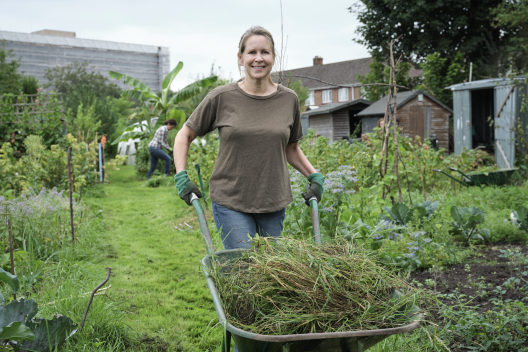
Obutonde (SAWN), set out to transform a derelict allotment in Oldham, Manchester, into a thriving, welcoming space, co-created with marginalised, black, African women and first generation migrants.
Working with women facing intersecting inequalities, their work was grounded in culturally sensitive and trauma informed practices. All of which cultivated a safe and welcoming environment for connection, wellbeing, and access to nature, with women - who have typically been underrepresented in climate action - empowered to take action.
What changed?
The women collectively decided upon the direction of the work, drawing upon their own knowledge and experiences - both old and new. Through storytelling and memories of their homelands, women shared traditional agricultural knowledge, based upon generations of wisdom about sustainable farming and growing. In addition, they organised formal information sharing sessions on topics such as recycling, fly-tipping, and sewing workshops. All of which were used to shape the collective planning and redesign of their natural space.
“These sessions are more than sewing sessions; they are confidence builders, skill shares, support networks, nature nurturers and recycle warriors, as women get to share and learn about climate change and how to work with nature.” - End of funding report
Why does it matter?
This all fed into their wider ambition of strengthening the role of their communities as climate activists. Through the project, women grew in confidence and capability, leading conversations on biodiversity, carbon footprints, and the creation of greener local spaces. Members attended the Humanities Project National Gathering, where they developed skills in planning, designing, and facilitating gatherings for change. Women who initially joined as participants went on to become volunteers and, in some cases, paid staff members, acting as visible role models and leaders within their communities.
More than creating opportunities for inclusion, the project shifted power into the hands of community members themselves. Women were not simply engaged in climate action initiatives designed for them; they were trusted to shape priorities, lead activities, and drive change on behalf of their communities, demonstrating a model of community-led climate action grounded in shared power and ownership.
What did they do?
Obutonde (SAWN), set out to transform a derelict allotment in Oldham, Manchester, into a thriving, welcoming space, co-created with marginalised, black, African women and first generation migrants.
Working with women facing intersecting inequalities, their work was grounded in culturally sensitive and trauma informed practices. All of which cultivated a safe and welcoming environment for connection, wellbeing, and access to nature, with women - who have typically been underrepresented in climate action - empowered to take action.
What changed?
The women collectively decided upon the direction of the work, drawing upon their own knowledge and experiences - both old and new. Through storytelling and memories of their homelands, women shared traditional agricultural knowledge, based upon generations of wisdom about sustainable farming and growing. In addition, they organised formal information sharing sessions on topics such as recycling, fly-tipping, and sewing workshops. All of which were used to shape the collective planning and redesign of their natural space.
“These sessions are more than sewing sessions; they are confidence builders, skill shares, support networks, nature nurturers and recycle warriors, as women get to share and learn about climate change and how to work with nature.” - End of funding report
Why does it matter?
This all fed into their wider ambition of strengthening the role of their communities as climate activists. Through the project, women grew in confidence and capability, leading conversations on biodiversity, carbon footprints, and the creation of greener local spaces. Members attended the Humanities Project National Gathering, where they developed skills in planning, designing, and facilitating gatherings for change. Women who initially joined as participants went on to become volunteers and, in some cases, paid staff members, acting as visible role models and leaders within their communities.
More than creating opportunities for inclusion, the project shifted power into the hands of community members themselves. Women were not simply engaged in climate action initiatives designed for them; they were trusted to shape priorities, lead activities, and drive change on behalf of their communities, demonstrating a model of community-led climate action grounded in shared power and ownership.
"“These sessions are more than sewing sessions; they are confidence builders, skill shares, support networks, nature nurturers and recycle warriors, as women get to share and learn about climate change and how to work with nature.” "- End of SAWN funding report
This is not separate from ‘the real work’. In community-centred climate action, relationships make climate action meaningful and sustainable. This raises a tension. How do projects protect time for trust-building when funding and reporting timelines often reward speed? And how can we show the impact of this work? Naming this tension matters. Meaningful participation cannot be rushed, underfunded, or added at the end of a process.
Participation has to be made possible
A repeated theme across the learning spaces was that equity cannot rely on goodwill alone. It has to be built into the conditions of the work.
That might involve paying people for their lived experience, covering transport, or budgeting for access support. It might require more time and flexibility, so communities are not asked to co-design work through a process that has already been decided. It might also mean changing the language, format or location of an activity, or paying closer attention to whether people recognise themselves in the invitation and believe their presence will matter. These practical decisions are part of the equity work. They are not just operational details. They show whose participation has been planned for, and whose participation is being treated as extra.
Case study: Just FACT (Just Food and Climate Transition)
What did they do?
Just FACT (Just Food and Climate Transition), a community-led programme in Tower Hamlets, London, brought people together to explore how local food systems could be more environmentally sustainable, socially just, and rooted in community power.
In their report, "Community participation and leadership in food and climate action: What have we learned?", they shared collective insights on community participation and leadership, exploring why these elements are vital and what enables people to stay involved in long-term projects.
What changed?
Effective community outreach and overcoming of barriers, they found, starts with meeting people where they already go - such as schools, community spaces, and health centres - and talking directly with communities to understand what could make a project accessible.
They offered activities that resonated with local interests, avoiding one-size-fits-all approaches, and created dedicated spaces for marginalised communities to gather, while ring-fencing budgets to remove financial barriers to participation.
Why does it matter?
To sustain participation and build genuine community power, the programme emphasised the importance of prioritising time and resources for relationship building, valuing care and solidarity, and co-designing projects to ensure shared decision-making.
To sustain this, they supported local people into paid organising and leadership roles, encouraged the sharing of existing knowledge, and distributed power and responsibility through the allocation of funding and resources.
Across their partnership, the programme tested several models of community leadership. Case studies and reflections of these different models are included in their report on Community participation and leadership.
Just FACT demonstrated the power of “delivering projects with people, rather than to them” - Just FACT, Just Food & Climate Transition 2021-2025 - Report
What did they do?
Just FACT (Just Food and Climate Transition), a community-led programme in Tower Hamlets, London, brought people together to explore how local food systems could be more environmentally sustainable, socially just, and rooted in community power.
In their report, "Community participation and leadership in food and climate action: What have we learned?", they shared collective insights on community participation and leadership, exploring why these elements are vital and what enables people to stay involved in long-term projects.
What changed?
Effective community outreach and overcoming of barriers, they found, starts with meeting people where they already go - such as schools, community spaces, and health centres - and talking directly with communities to understand what could make a project accessible.
They offered activities that resonated with local interests, avoiding one-size-fits-all approaches, and created dedicated spaces for marginalised communities to gather, while ring-fencing budgets to remove financial barriers to participation.
Why does it matter?
To sustain participation and build genuine community power, the programme emphasised the importance of prioritising time and resources for relationship building, valuing care and solidarity, and co-designing projects to ensure shared decision-making.
To sustain this, they supported local people into paid organising and leadership roles, encouraged the sharing of existing knowledge, and distributed power and responsibility through the allocation of funding and resources.
Across their partnership, the programme tested several models of community leadership. Case studies and reflections of these different models are included in their report on Community participation and leadership.
Just FACT demonstrated the power of “delivering projects with people, rather than to them” - Just FACT, Just Food & Climate Transition 2021-2025 - Report
Grant holders also explored this through climate communications. There is no single climate story. Climate change lands differently depending on many factors, including where people live, what resources they have and what histories they carry. Equitable communication asks projects to be specific about audience, rather than assuming that one message will reach everyone. It also asks whether information does more than reach people. Does it speak honestly to their lives?
These shifts will not solve structural inequality on their own, but they can help projects move from saying equity matters to showing where and how it matters in the work.
Good intentions are not enough
One of the most powerful reflections from the Action Learning Set was the recognition that kind, well-intentioned organisations can still reproduce harm.
This matters because equity work often gets stuck at the level of intent. People want to do the right thing. But good intentions do not remove unequal power. They do not automatically change whose voice is heard or whose knowledge is valued, or whose discomfort shapes the pace of change.
Grant holders recognised how organisational structures can quietly reproduce prejudice. Sometimes Black people and people of colour, and others with lived experience of marginalisation, are expected to carry the responsibility for change. At other times, those same voices are ignored, diluted or sidelined.
This is difficult learning. It means looking beyond whether people are nice, and asking whether the work is just. Are responsibilities being shared? Are people most impacted by inequality being listened to without being overburdened? Are there real routes for challenge, repair and change?
It also means recognising that climate equity work can be heavy. It asks people to look at harm, exclusion, injustice and power. For people with lived experience of marginalisation, this can bring up anger, isolation, grief and fatigue. Care is not about avoiding difficult conversations. It is about creating the conditions for people to stay in them.
We cannot care for the climate while neglecting the people tending the work.
Questions to take back into the work
The learning shared through these spaces does not offer a single answer. But it does offer questions that other community-centred climate action projects might use to reflect on their own work.
Design
-
Who was this project originally designed for?
-
What assumptions shaped it?
-
Who was involved early enough to influence the direction of the work?
Participation
-
Who is currently included, and who is missing?
-
What barriers might we be creating through our language, timing, location, format or ways of working?
-
What would make participation possible, meaningful and dignified for the people we are trying to reach?
Power
-
Who holds decision-making power, and where could that power be shared?
-
Who is being asked to bring lived experience, and are they being paid, supported and listened to?
-
Who can challenge the direction of the work?
Practice
-
What are we moving too quickly to notice?
-
What small, values-led change could we make in the next one to three months?
These questions are not a checklist. They are a starting point for deeper practice.
Continuing the learning
Across the Climate Action Fund, grant holders are already building knowledge through action. They are testing small shifts, surfacing difficult questions, and learning from communities. Climate equity is an ongoing practice of listening, sharing power, and staying accountable.
For community-centred climate action, this may be one of the most important lessons: equity is not only about who is invited into the work. It is about whether the work itself is willing to change.
The Climate Action Fund (CAF) is a long-term commitment from The National Lottery Community Fund to support communities across the UK to act on climate change and involve more people in positive environmental action. The CAF Learning and Support Partnership is led by Arup, working with Innovation Unit, Creature & Co., and the University of Leeds. The partnership was commissioned in 2024 by The National Lottery Community Fund to support grant holders in the Climate Action Fund (CAF).
Share this page
 Share this on Bluesky
 Share this on LinkedIn